By Brian Ackerman
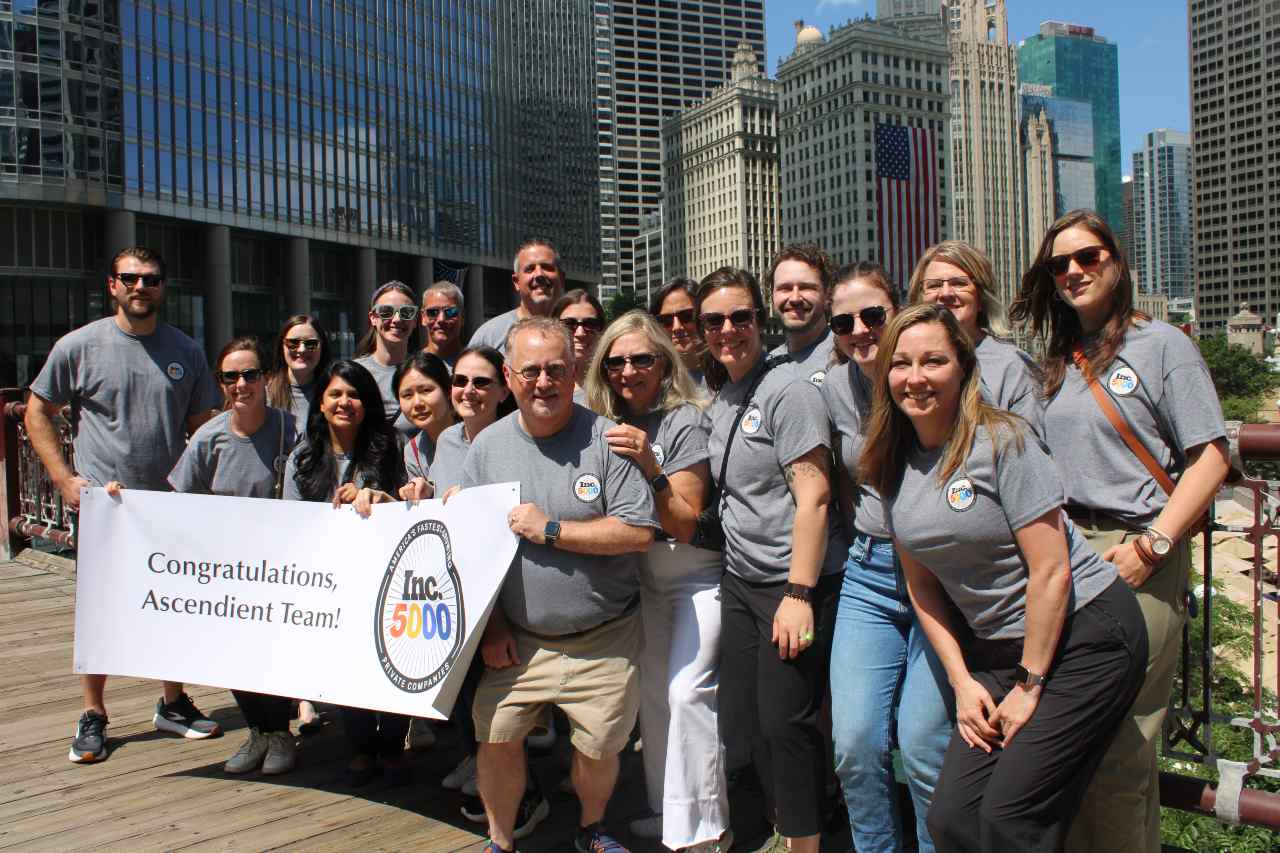
The Inc. 5000 list is known as the authoritative ranking of America’s fastest-growing private companies, so I take great pride in seeing Ascendient included for the first time in our 30-plus years as a firm.
I mention 30-plus years because it’s fairly unusual to see a company make its Inc. 5000 debut after so many years in business. Many other names on the list are startups or early-stage tech companies with private equity backers and hockey-stick growth trajectories. Think Microsoft, Dell, or LinkedIn, back in the day.
At Ascendient, we took a more measured approach.
Dawn Carter founded the firm in 1994 believing that hospitals needed a genuine thought partner, not just another consultant with a template. True to that vision, we’ve always emphasized steady, organic growth built on longstanding client relationships and positive word of mouth. Persistence and consistency might not be the normal path to an Inc. 5000 ranking, but it’s core to who we are as a firm. Several clients have been with us for 20 years or more. Every client who ever renewed an engagement agreement is a part of our success story, and I’m grateful to each and every one of them.
As Dawn put it to me recently: “We never set out to be the fastest growing anything. We set out to do the work right and let that speak for itself. I guess it's speaking a little louder than I expected.”
When I joined the firm in 2004, we were just seven people working from a small office in Chapel Hill, North Carolina. Most of our clients back then were in the Carolinas, as well – or at least in the Southeast. Today we work from coast to coast, including current engagements in Alaska and Hawaii. Overseas engagements such as Micronesia and Jordan may not show up on the animated map on our website, but they do show how our reputation has spread, slowly but surely.
While we’re still headquartered in the Research Triangle region, our consulting team has grown to include professionals based in Texas, Michigan, Florida, and beyond. Remote work, turbocharged by the Covid pandemic, gave us access to smart, dedicated people all across the country. Their passion and expertise have been a big factor in our growth. We literally couldn’t do it without them.
Consistency is in our DNA, but that doesn’t mean Ascendient is averse to change. Dawn Carter was one of the earliest and most persistent thought leaders on healthcare transformation, pushing the entire healthcare industry to prepare for a post fee-for-service world, where taking care of sick patients can actually cost more money than it brings in.
More recently, as we saw U.S. healthcare moving toward population health models, we greatly expanded our public health work, bringing decades of strategy and planning experience to state and local health departments that were feeling the pressure to do more with less. That work continues to be a key driver of our recent growth.
As CEO, I spend a lot of time thinking about the future of the firm, and I believe Ascendient is perfectly positioned to maintain our mission-driven growth trajectory with deep, independent expertise in healthcare and public health, and increasingly, at the intersection of the two.
Health systems face growing revenue pressures and mounting calls to prove their community benefit. Health departments, meanwhile, are forced to look for new partners and new revenue streams as public funding dries up. In this environment, public and private organizations have to work together to protect the health of their communities while maintaining financial sustainability.
At Ascendient, we are seeking to lead the way on those partnerships. We’ve brought health systems and health departments together across 34 counties for one of the nation’s largest regional CHNAs, and we are currently conducting primary research to understand needs, expectations, and best practices in cross-sector integration.
Efforts like these will help define our growth for the next 10 years – deepening our relationships and widening our reach at the same time. We will provide more health systems with a full range of services to help them navigate the tumult of healthcare transformation. We will provide more health departments with a full range of services to help achieve their mission in the face of reduced funding. And we will find more innovative, cost-effective ways that both sectors can work together to create healthier communities.